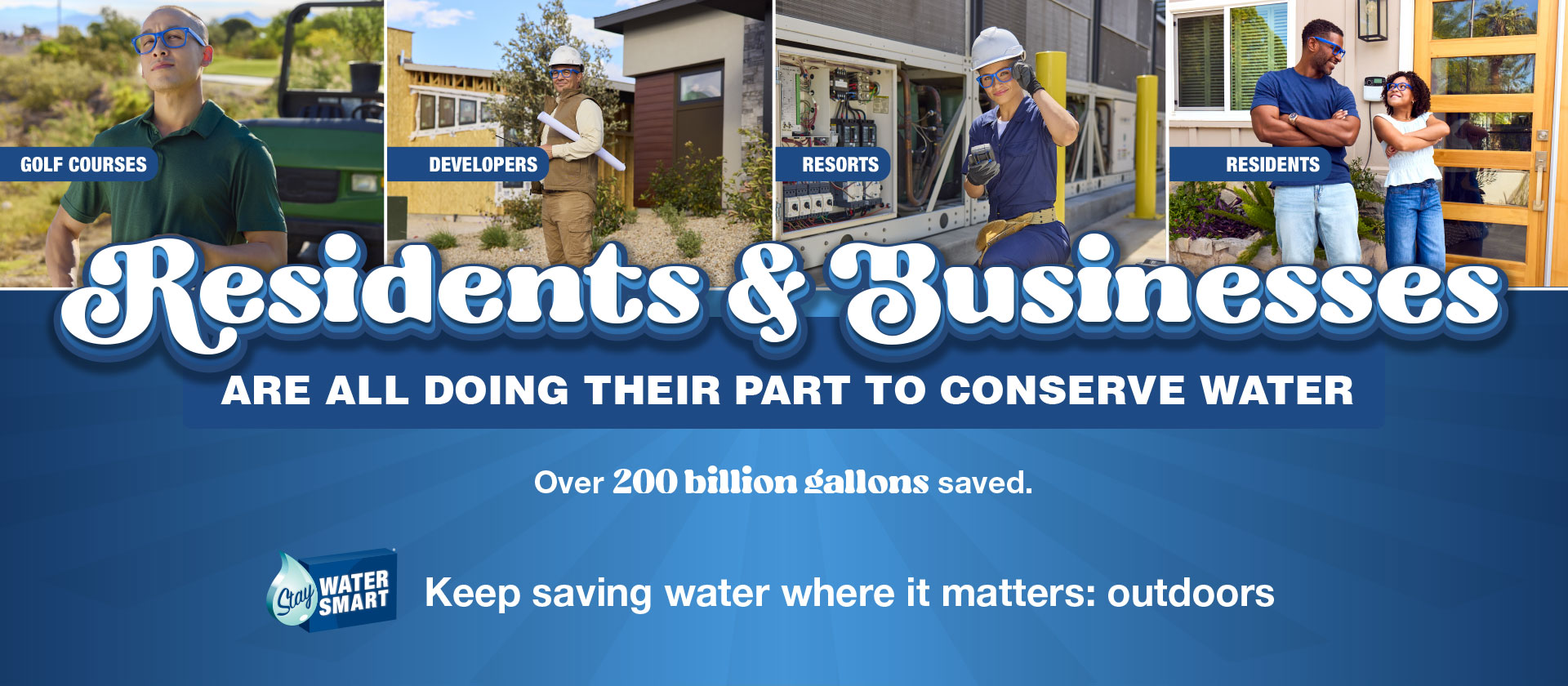
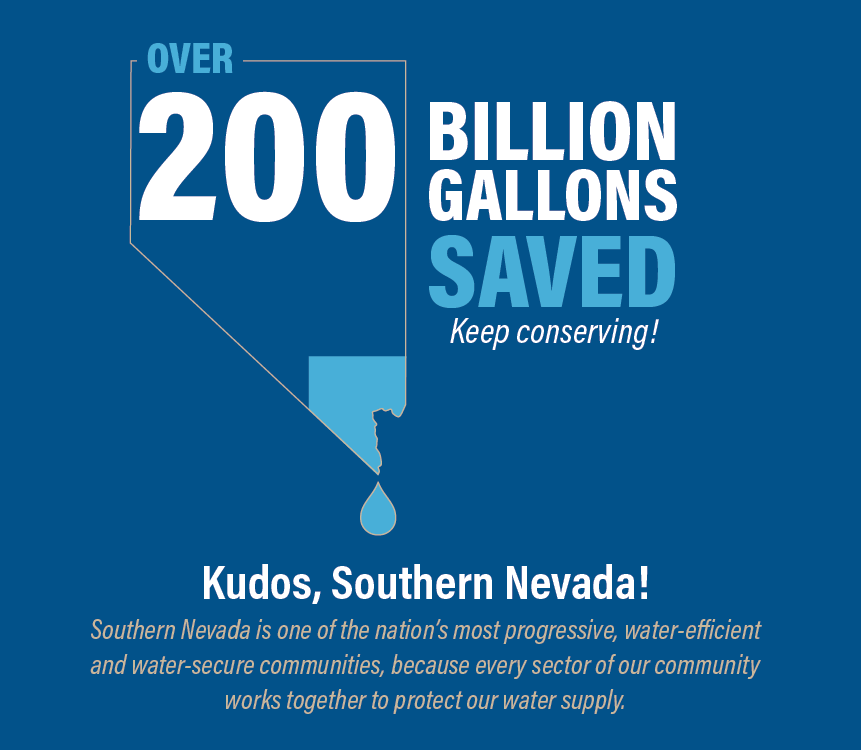
Over the past two decades, the community has collectively saved 200 billion gallons of water. Residents and businesses follow the mandatory seasonal watering schedule and replace grass with water smart landscaping. Golf courses operate within water budgets and utilize advanced irrigation technology. Just seven percent of the valley's water use is from resorts, which invest in water-efficient equipment. In addition, developers follow strict water-smart building codes inside and out.
In other words, this has been a true community effort, with everyone playing a part. Thank you, Southern Nevada. Keep conserving.
💧Save water where it matters most: outdoors.
What can I do to save water?
- ✅ Follow the mandatory seasonal watering schedule to reduce outdoor water consumption—which accounts for about 60 percent of Southern Nevada's overall water use.
- ✅ Find and fix leaks.
- ✅ Replace nonfunctional grass with drip-irrigated trees and plants through the SNWA's Water Smart Landscapes rebate program (WSL).
💵We offer cash incentives and programs to help!💵
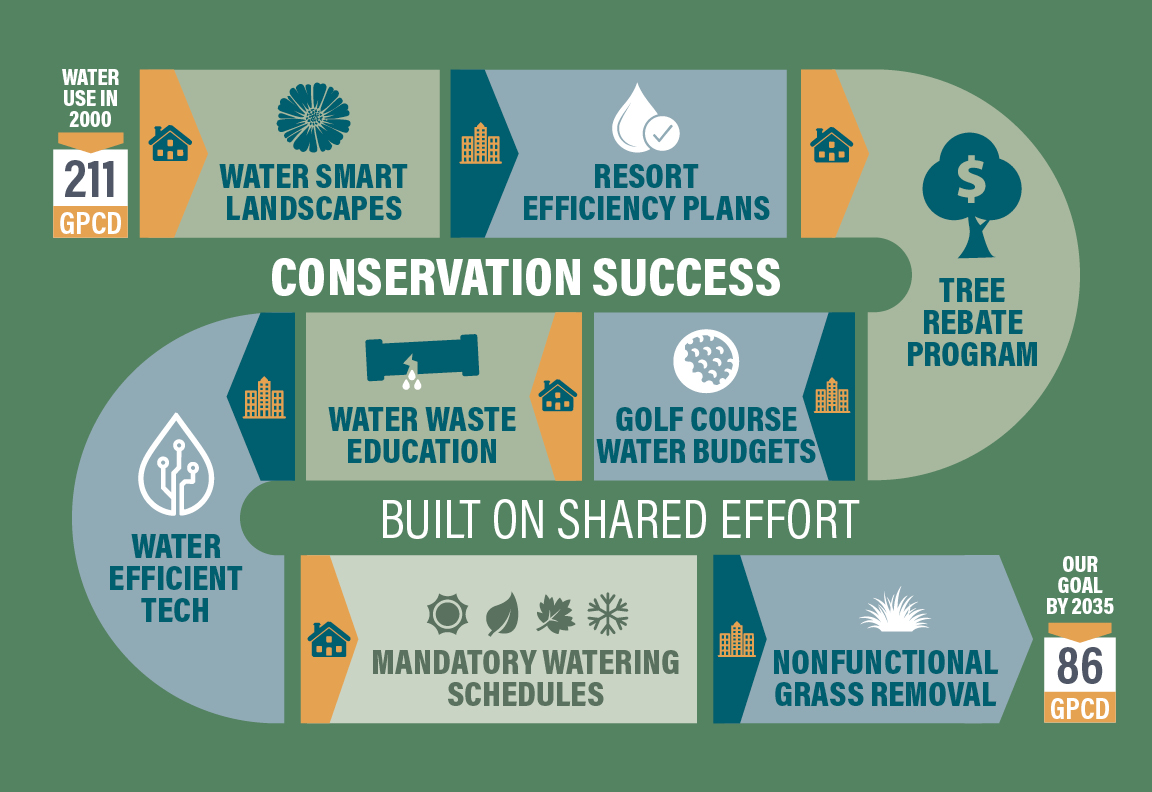
Because Southern Nevada's residents and businesses follow watering restrictions, replace grass and cut waste, we're able to maintain reliable water supplies.
- Water Smart Landscapes Rebate program: The community has replaced more than 250 million square feet of grass with water-smart landscaping, saving 217 billion gallons since 1999.
- Tree rebate: Trees require less water than grass and provide valuable shade. Homeowners have added more than 8,000 trees through this program, creating 3.5 million square feet of canopy at maturity to combat the heat island effect and help retain soil moisture.
- Water waste education and enforcement: Local ordinances prohibit water waste from irrigation systems and leaks. Southern Nevada water utilities enforce these laws and educate property owners about efficient outdoor water use, saving millions of gallons every year and helping customers keep water bills lower.
- Mandatory watering schedules: Seasonal watering restrictions are supported through advanced metering, increased outreach, and community education on efficient irrigation practices. More than 90 percent of the community is aware of the watering schedule, and approximately 80 percent follows it each year. Every residential and commercial property – including resorts – is required to follow the watering schedule.
- Replacement of nonfunctional grass: Nevada law prohibits irrigation of decorative grass for nonresidential properties beginning in 2027. More than 24 million square feet have been replaced, saving 1.3 billion gallons of water per year.
- Water Efficient Technologies program: Businesses have completed more than 480 water efficiency projects to keep their business operations water smart, saving nearly 29 billion gallons of water.
- Golf course water budgets and grass replacement: Golf courses manage strict water budgets and face financial penalties for exceeding them. While they have flexible irrigation schedules to support operations, they are making measurable reductions. Local courses have replaced more than 44 million square feet of grass, saving 2.4 billion gallons.
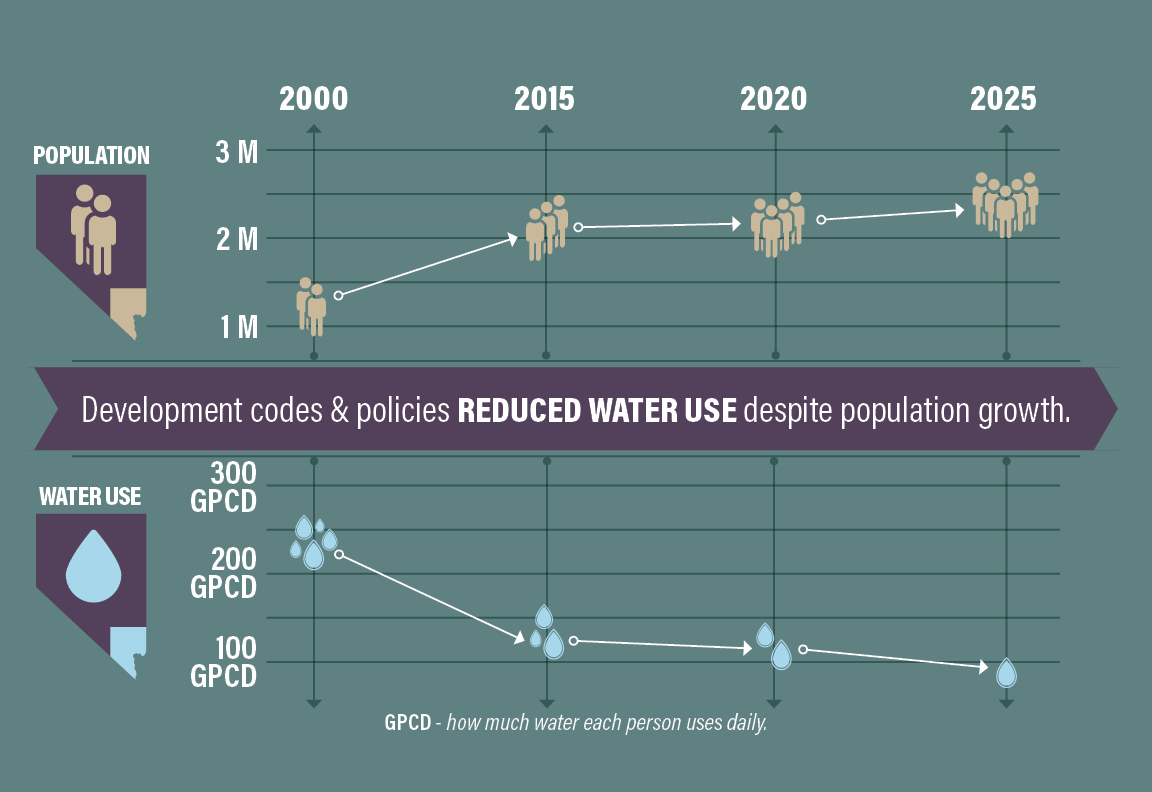
Water efficiency drives our economy. Every new project must meet strict conservation standards, avoiding water-intensive development that drains water supplies.
- Landscape development code (2003/2022): New residential and commercial developments are permitted only to have water-efficient, drip-irrigated landscaping. Grass has been restricted in phases: since 2003, it has been prohibited in new commercial developments and residential front yards; beginning in 2022, it was also prohibited in new residential backyards. This makes new development very efficient by minimizing the amount of water for outdoor irrigation—Southern Nevada's largest consumption of water.
- High efficiency fixtures required (2019): For decades, Nevada law has required water‑efficient plumbing fixtures. SNWA strengthened those standards through local codes that require WaterSense fixtures in new construction, helping reduce overall water demand.
- Golf course development prohibition (2021): Development of new golf courses is no longer permitted in Southern Nevada, and existing golf courses operate on limited water budgets to meet the demands for recreational golf.
- No new manmade lakes/fountains (2021/2022): Southern Nevada has long restricted large decorative water features due to their high water use. Today, new outdoor fountains, water features, and manmade lakes are limited or prohibited to prevent additional demand on our community’s water supply.
- Residential swimming pool size limitation (2022): New residential pools are limited to 600 square feet to support functional use while preventing oversized designs. The average backyard pool is about 470 square feet. These limits are expected to save approximately 32 million gallons of water over the next decade.
- Evaporative cooling moratorium (2023): New commercial development is required to install mechanical cooling rather than water-intensive evaporative cooling systems.
- Septic system limitations (2023): New commercial and residential development must connect to the sanitary sewer system rather than septic systems. This recycles millions of gallons of water annually and protects groundwater supplies from contamination.
- Replacement of nonfunctional grass (2027): Nevada law prohibits irrigation of decorative grass for nonresidential properties beginning in 2027. More than 24 million square feet have been replaced, saving 1.3 billion gallons of water per year.
- Resort water efficiency plans: Resorts are required to follow water efficiency plans to reduce consumption. Indoor water is recycled back to Lake Mead, with a strong focus on limiting outdoor use and improving cooling systems. Resorts use only 7 percent of the community’s water while employing nearly 200,000 people and serving as the backbone of our local economy.